
Our Mission

At Agora, we are committed to preserving and celebrating cultural heritage. We aim to be a vibrant community hub that fosters creativity and connection through live music, theatre, and film. Our space honors the rich history of our community, while our programs encourage participation and appreciation of the arts in a welcoming environment.
Our History
THE BUILDING
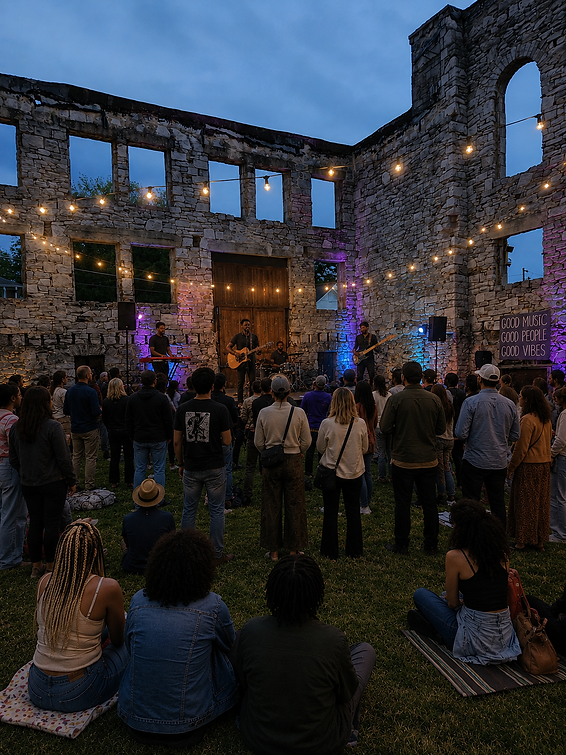
A stone shell in Atlanta's English Avenue neighborhood, built in 1920 from Stone Mountain granite. Originally constructed as Western Heights Baptist Church by architect Charles H. Hopson, it features distinctive masonry craftsmanship and unadorned Mission Revival architecture.
THE JOURNEY
1920: Built by white congregation (Western Heights Baptist Church) at a cost of $50,000—described as "the handsomest stone structure of the city"
1950: White congregation abandoned it due to "Negro encroachment" and moved elsewhere. The building sat vacant for years.
1948: African American St. Mark AME congregation purchased it after their wooden church in Vine City burned down. The congregation grew significantly and became one of Atlanta's largest AME churches, hosting civil rights gatherings.
1976: St. Mark congregation relocated outside the city. The building was abandoned again and fell into severe disrepair, becoming a symbol of urban decay in "The Bluff" (a drug-afflicted area).
1995: Pastor/architect Winston L. Taylor Jr. purchased the deteriorating building, removed the damaged interior and roof, and stabilized it as a stone shell—leaving just the walls intact.
2022-2023: After extensive documentation and advocacy by Taylor, the Atlanta Preservation Center, and Georgia Tech, St. Mark AME was officially designated a City of Atlanta Landmark (February 2023).
Today: Transformed into a community resource with a pollinator garden, hosting jazz nights, weddings, architecture tours, and community events.
